EN

EN

EN

Zhongjia Biotech's pipeline in the Alzheimer's disease (AD) field is highly innovative. Rather than using conventional antibody drugs or targeted gene-modified cells, it uses the body's own "special subtype natural killer (NK) cells" (code ZJ-S-0106) to intervene in this neurodegenerative disease.
Technology route (non-gene-modified, allogeneic NK cells): This is an allogeneic, cryopreserved, non-gene-modified natural killer (NK) cell therapy. In brief, mononuclear cells are extracted from umbilical cord blood, expanded on a large scale and induced to differentiate in vitro using proprietary technology, and then these vigorous "special subtype NK cells" are infused intravenously back into patients.
Core scientific mechanism for treating AD: Currently approved AD drugs (such as Leqembi and Kisunla) mainly clear β-amyloid through a single target. In contrast, the mechanism of this project is a disruptive route of "multi-target clearance + systemic immune remodeling": (1) Crossing the blood-brain barrier: Special subtype NK cells can effectively cross the blood-brain barrier and enter the brain microenvironment. (2) Scavenger effect: Special subtype NK cells have been shown in vitro and in early clinical studies to engulf and degrade multiple toxic protein plaques that cause neuronal death (including not only β-amyloid but also Tau protein and α-synuclein). (3) Immunosuppressive effect: Special subtype NK cells can precisely identify and eliminate immune cells in the brain that are overactivated and cause persistent neuroinflammation (such as abnormally activated T cells), while secreting anti-inflammatory factors, improving the brain's degenerative microenvironment at its root.
Zhongjia Biotech's breakthrough in the Alzheimer's disease (AD) field does not rely solely on independent in-house research; it is built on a cross-disciplinary joint team composed of "internal executives/underlying process experts, world-leading neurology advisors (SAB), and principal investigators (PI) from frontline clinical research institutions."
Based on the latest clinical progress of this project as of 2026, the organizational structure and key figures of the core AD team are as follows:
Internal core management and underlying process team (R&D engine)
This team is responsible for establishing the company's strategic direction and solving the most core cell manufacturing process (CMC) barriers.
Qu Shoukang (chairman and CEO): Mr. Qu Shoukang is the most core driving force behind Zhongjia Biotech's comprehensive transformation toward neurodegenerative diseases. As the company's public spokesperson and strategic planner, he led this project's exploration from oncology into Alzheimer's disease and Parkinson's disease.
Professor Liu Jia (chief scientific officer, CSO): The designer of the underlying technology foundation, she led the process development of the unique in vitro serum-free, non-gene-modified platform for extreme expansion and directed differentiation of special subtype NK cells. Based on the cryopreservation and high-purity preparation technologies established by the technical team she leads, special subtype NK cells can be administered intravenously, providing process feasibility for large-scale cell therapy for AD.
Core clinical principal investigators (frontline assault team)
The success of clinical trials depends heavily on the execution and evaluation of principal investigators (PI) at frontline hospitals; different stages of the AD project are deeply bound to top clinical experts.
Professor Xiao Liang: The core commander of the current clinical trials for mild and moderate Alzheimer's disease. Because the underlying mechanism of special subtype NK cells is precisely to regulate neurodegeneration through the immune system, Professor Xiao Liang's immunology background fits this project perfectly.
Other early clinical collaboration PIs: In early clinical trials, President Ren Lijie, a neurology expert at Shenzhen Second People's Hospital, also participated deeply in early safety and dose-escalation validation, laying the clinical foundation.
Scientific Advisory Board (SAB, think tank)
Because using peripheral immune cells to treat brain degeneration is an extremely cutting-edge interdisciplinary field, Zhongjia established a star-studded Scientific Advisory Board (SAB) to support it.
Professor Lu Hongshe (autism treatment expert): His joining greatly enhanced Zhongjia's academic endorsement in mainstream neuroscience. Dr. Lu Hongshe's deep achievements in the pathology of autism, frontotemporal dementia, and Alzheimer's disease help the company more precisely interpret clinical data on how special subtype NK cells reduce Tau protein and amyloid toxicity.
Professor Lian Qizhou (cell authority): He provides the most cutting-edge basic immunology guidance on how special subtype NK cells can maintain maximum killing power and survival rate in vitro, and how to better penetrate microenvironment barriers.
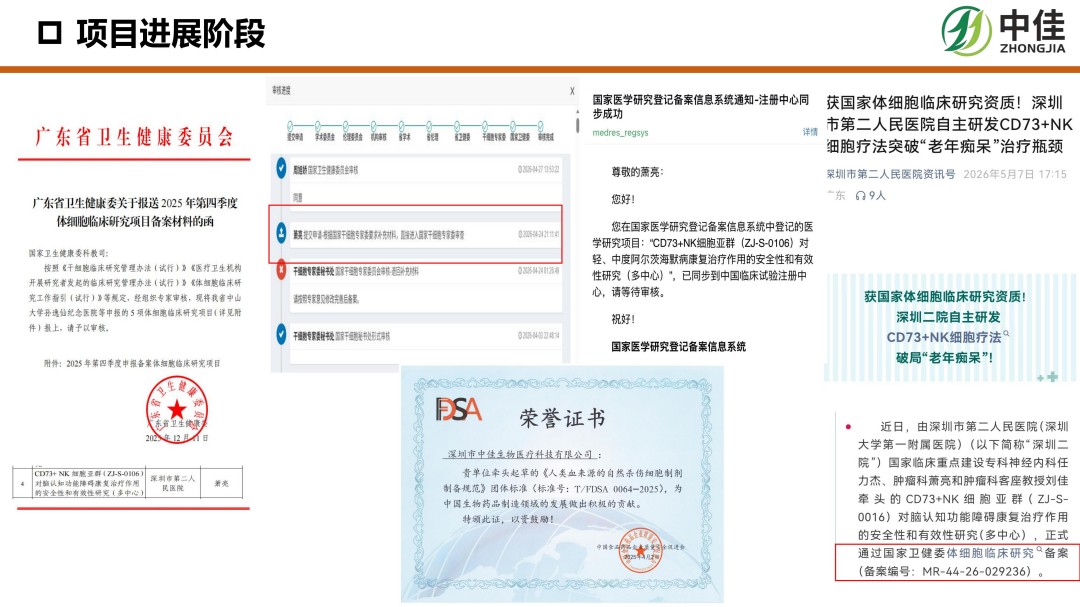
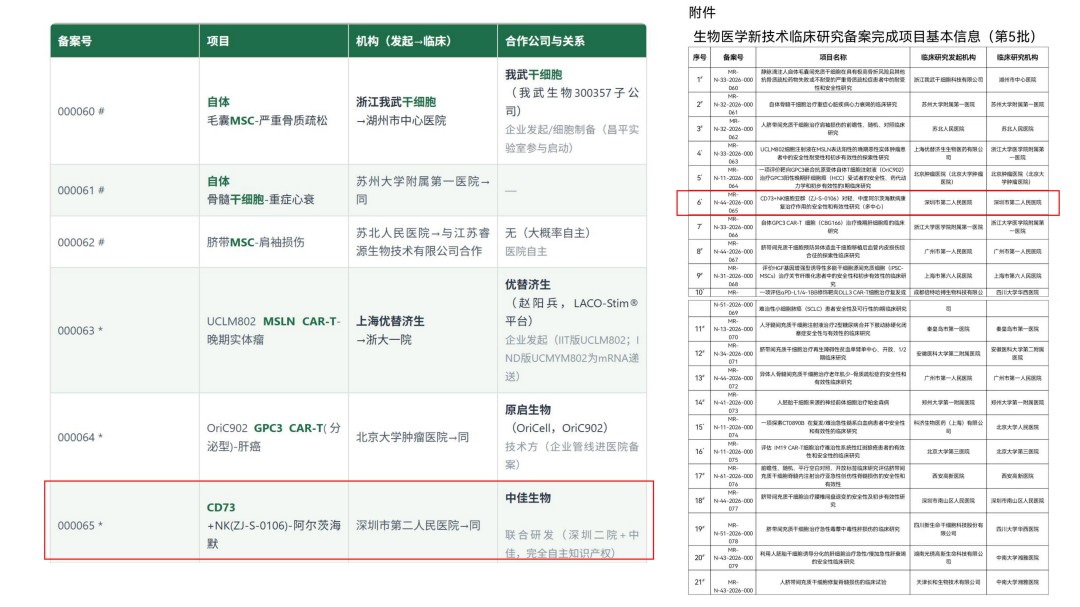
This project is currently in the clinical trial (IIT) stage and is being conducted across multiple centers (Shenzhen Second People's Hospital, Tongji Hospital of Tongji Medical College of Huazhong University of Science and Technology, and Union Hospital of Tongji Medical College of Huazhong University of Science and Technology); Shenzhen Second People's Hospital has filed for somatic cell clinical research, and partial clinical data show that even among patients with relatively severe moderate AD, 100% of patients in the highest-dose group had cognitive decline halted or improved 3 months after treatment, and 50% of patients' cognitive scores (CDR-SB) miraculously reversed from moderate back to mild levels. This project mainly targets patients with mild and moderate AD and adopts a higher-dose, longer-cycle infusion regimen to verify the optimal dose and the durability of long-term efficacy.
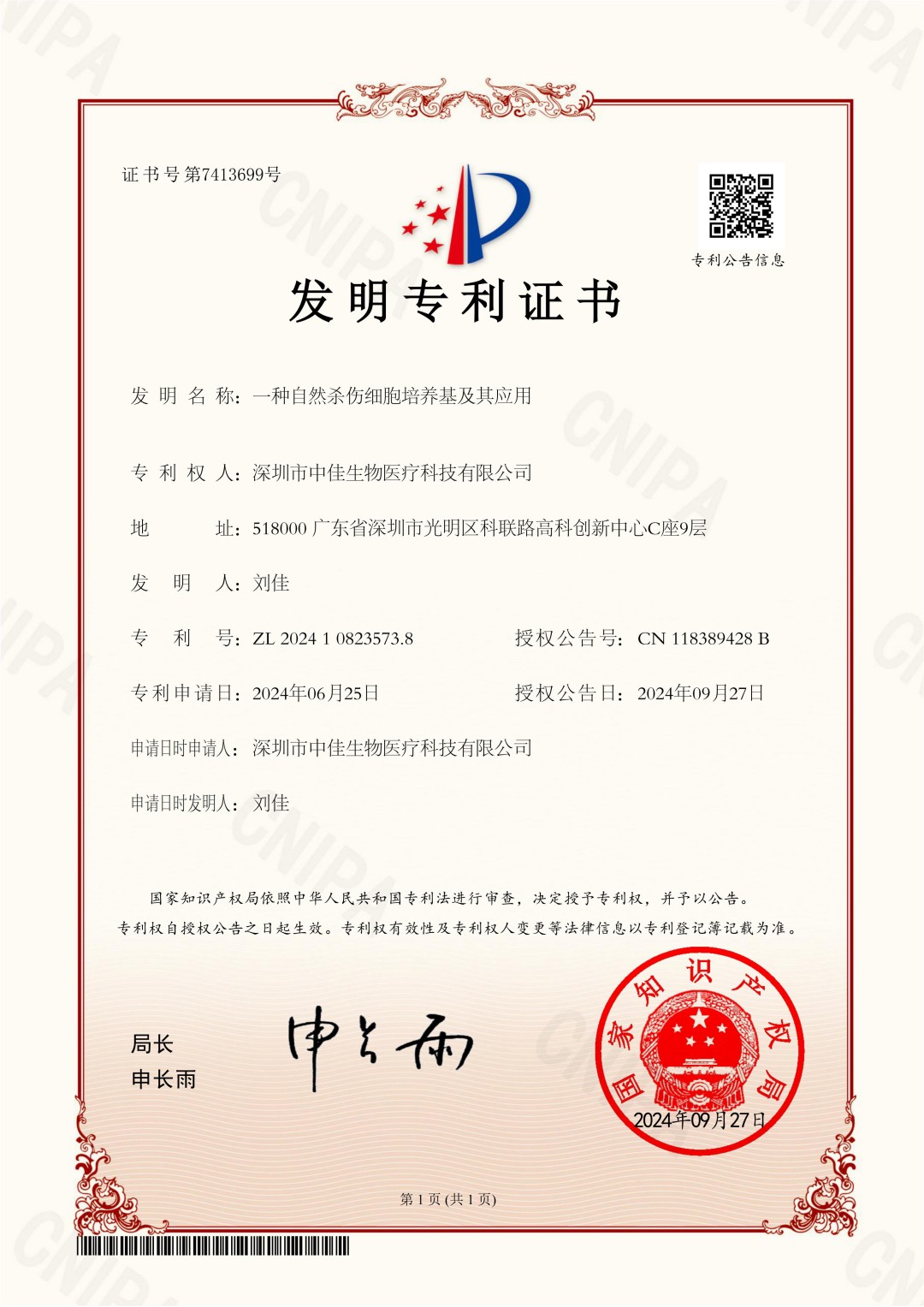
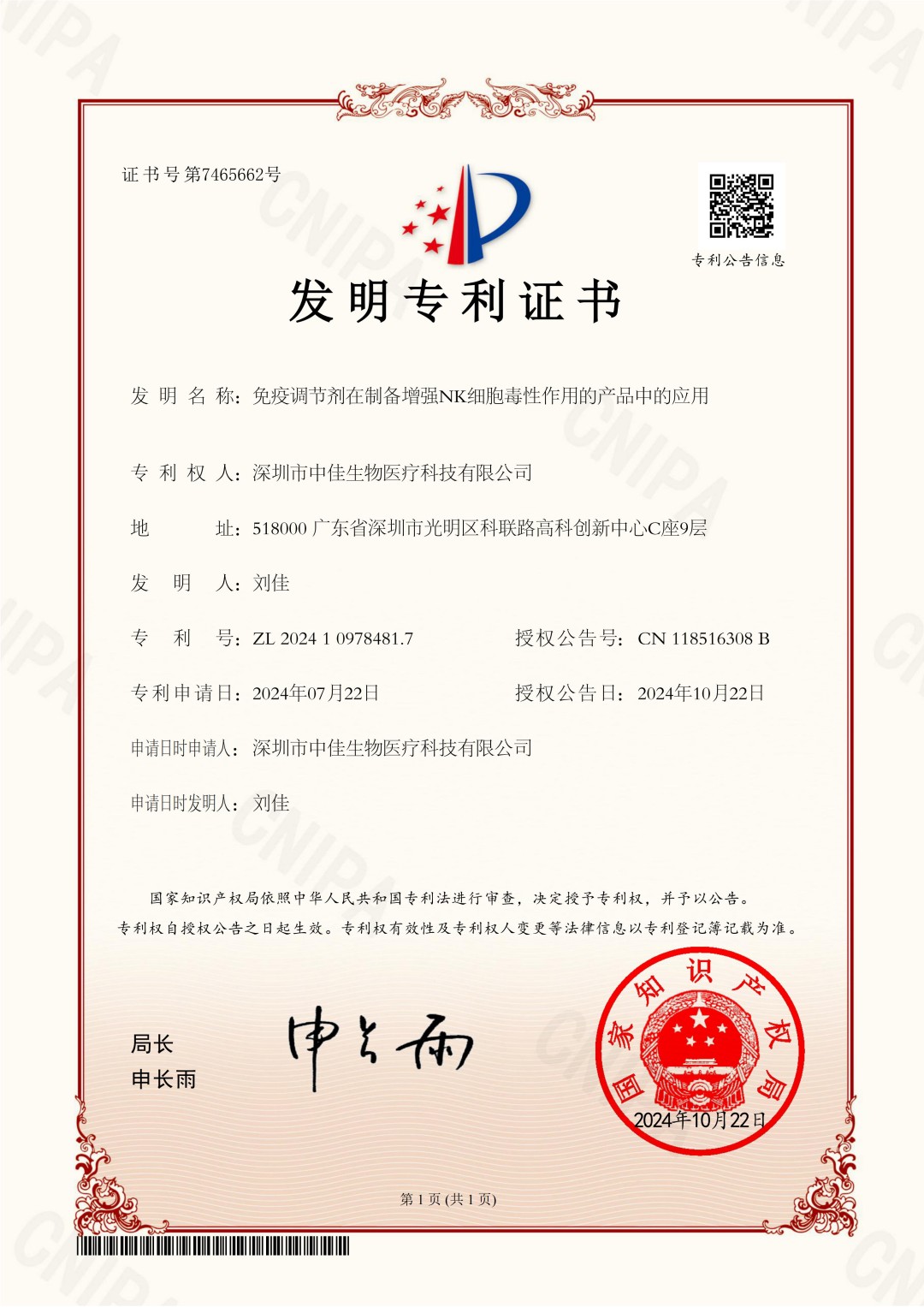
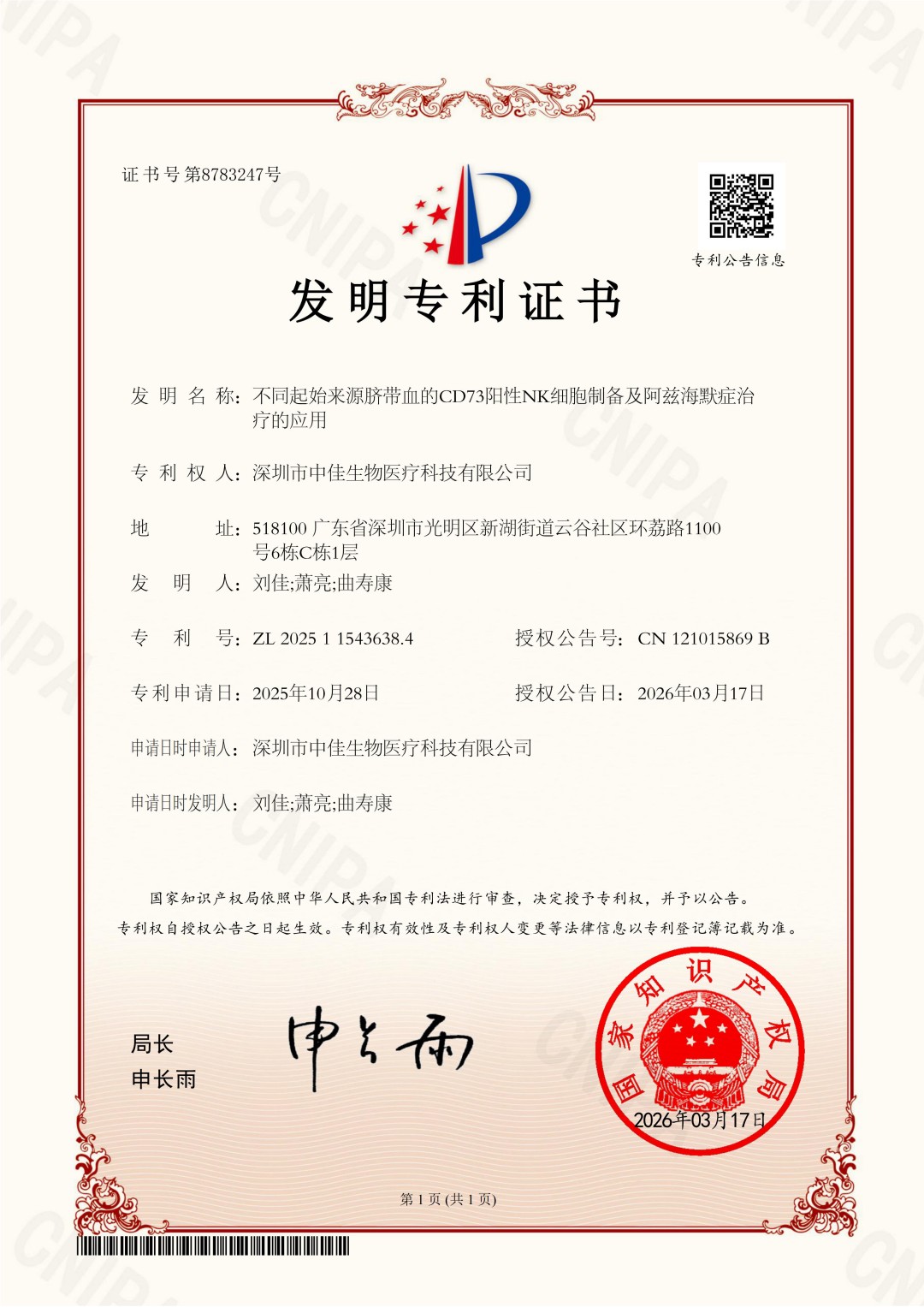
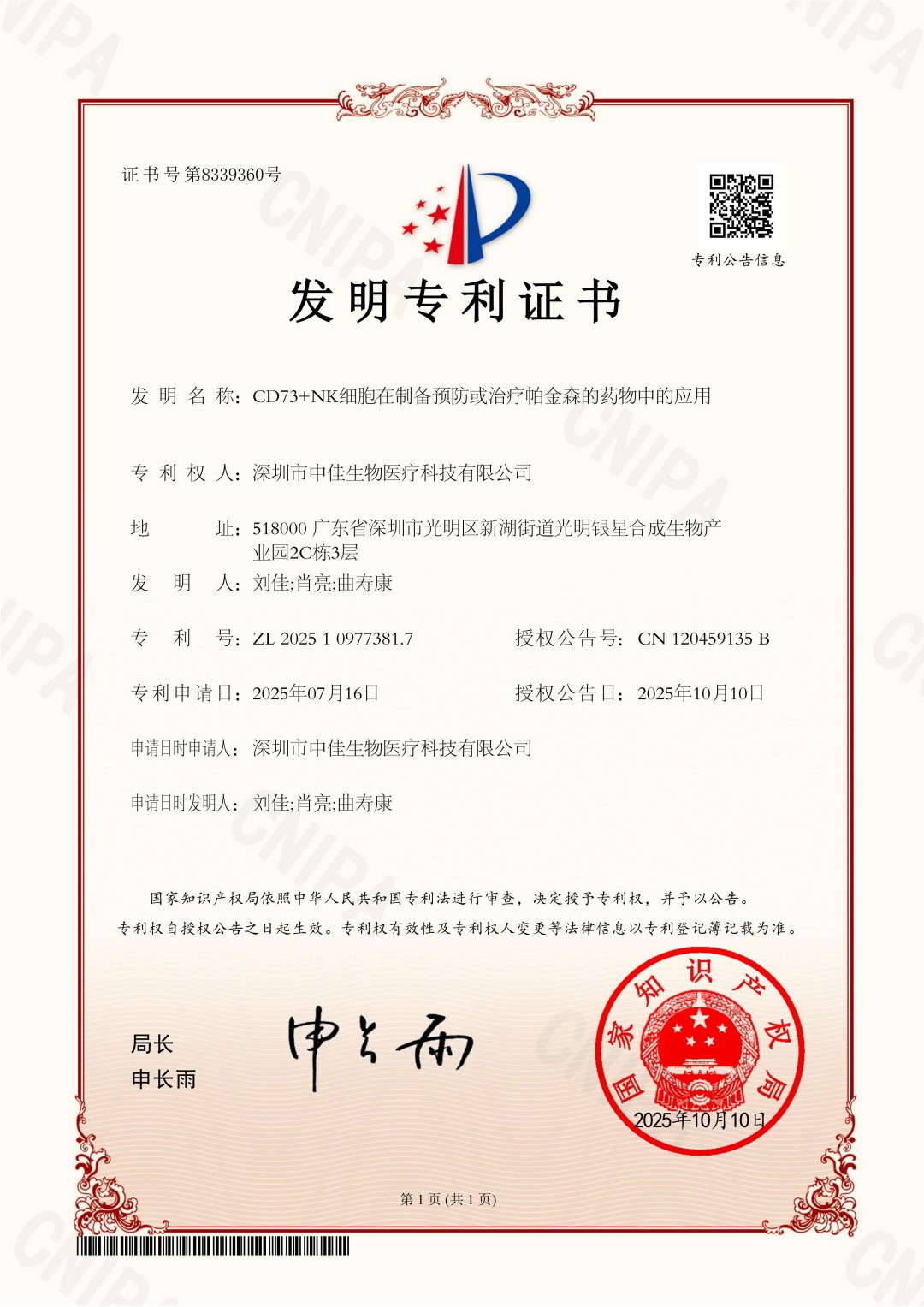
This project has currently filed 4 invention patents, of which 2 invention patents have been granted; 2 papers are under review awaiting publication. Zhongjia's technical moat does not lie in "specific gene-editing sequences" but in an extremely deep "cell process manufacturing (CMC) barrier":
In vitro induced differentiation and serum-free expansion technology: Special subtype NK cells are extremely difficult to culture independently in vitro and easily lose killing activity. Zhongjia holds globally leading patented underlying NK cell in vitro expansion technology and proprietary processes that, without any genetic engineering modification (no viral vectors), can exponentially expand a very small number of umbilical cord blood mononuclear cells into tens of billions of NK cells within a short time, with key receptors on the cell surface expressed.
Clinical-grade cell cryopreservation technology patent: A major pain point of living cell therapy is the extremely short time window for transport and administration. Zhongjia has mastered deep cryopreservation technology (Cryopreserved) for special subtype NK cells. This patented process ensures that after thawing and recovery at medical institutions, the cells still maintain an extremely high survival rate and strong neuroregulatory/cytotoxic functions, making intravenous infusion of this therapy in ordinary outpatient clinics a reality.
As a therapy standing at the frontier of interdisciplinary fields, assessing its maturity and reliability requires a multi-dimensional view:
High reliability of the theoretical mechanism: Once induced, differentiated, and surviving, these special subtype NK cells possess both the immune paracrine regulatory properties of stem cells and the potent, targeted toxic protein clearance capability of NK cells, making their mechanistic logic more comprehensive than other monoclonal antibody drugs. Early data show that the mechanism theory of "improving cognition by blocking neuroinflammation" is impeccable, and early individual cases and small samples (a dozen or so patients) have demonstrated "reversal" effects beyond the reach of conventional drugs.
Strict quality control requirements for the core technology process: The reliability of cell and gene therapy depends to a great extent on the stability of the manufacturing process. To ensure that such living-cell drugs do not produce tumorigenic mutations and have uniform efficacy, Zhongjia Biotech's years of preparation and quality control systems have established extremely strict release standards.
Extremely high safety bottom line (definite high reliability): Unlike the booming CAR-T (chimeric antigen receptor T-cell) therapy, the special NK cell subtype is an allogeneic, non-gene-modified innate immune cell. It fundamentally eliminates fatal risks such as "cytokine storm (CRS)" or severe "immune effector cell-associated neurotoxicity syndrome (ICANS)." Moreover, because the cells are derived from umbilical cord blood, there is no allogeneic rejection or graft-versus-host disease (GVHD). To date in clinical trials, no drug-related serious adverse events have occurred, and this safety indicator is extremely mature.
As a star pipeline targeting neural microenvironment remodeling, this project ZJ-S-0106 is a non-gene-edited, umbilical cord blood-derived natural killer (NK) cell innovative drug. The mechanistic advantages it has demonstrated in clinical development (such as reducing neuroinflammatory markers including p-Tau181 and glial fibrillary acidic protein GFAP) give it a unique positioning advantage in Alzheimer's disease (AD), especially in moderate patients—the "blind spot" of conventional drugs.
The U.S. FDA has granted SNK01 Fast Track Designation for the treatment of moderate Alzheimer's disease. The future market demand and prospects for this specific product can be analyzed in depth from the following professional dimensions:
Market demand: precisely filling the "treatment desert" of moderate AD
The two innovative anti-Aβ amyloid monoclonal antibodies currently marketed globally (lecanemab/Leqembi and donanemab/Kisunla) are strictly limited to early/mild cognitive impairment (MCI) stages. Once a patient's disease progresses to the moderate stage, the clinical benefit of conventional monoclonal antibodies drops substantially or even no longer applies.
Huge base of moderate patients: Among the tens of millions of AD patients worldwide, moderate patients account for about 30% of total cases. These patients already have obvious chronic neuroinflammation and multiple protein tangles in the brain and face extremely high disability risk and family care costs. This project ZJ-S-0106 precisely positions itself in the moderate stage, directly activating this large incremental market long forgotten by giants.
Rigid demand that goes beyond "slowing" and favors "stabilization/improvement": Among treated patients, subjects showed reversal on cognitive scales such as CDR-SB, ADAS-Cog, and ADCOMS. For families of moderate patients, maintaining current self-care ability without decline is an absolute necessity of extremely high value.
Prospects and moat: multi-dimensional systemic modification of mechanisms
Compared with other cell pipelines, the prospect of this project ZJ-S-0106 as an expanded allogeneic NK cell lies in its unique pleiotropic microenvironment remodeling mechanism:
Naturally crossing the blood-brain barrier (BBB): Conventional cell drugs or macromolecular drugs are often limited by delivery efficiency. ZJ-S-0106 does not require complex brain surgery injection; conventional intravenous infusion can efficiently cross the blood-brain barrier, greatly improving clinical convenience and patient compliance.
Excellent safety record (no ARIA risk): The biggest clinical pain point of monoclonal antibody drugs is the possible induction of brain edema and cerebral hemorrhage (ARIA risk). ZJ-S-0106 has shown excellent tolerability in current preclinical data, with no drug-related serious adverse events. This high safety moat makes it very easy to combine with monoclonal antibodies in the future as a composite therapy of "protein clearance + microenvironment anti-inflammation."
Commercialization pain points and future breakthrough paths
To successfully bring ZJ-S-0106 from a "fast-track" innovative drug to a multi-billion-dollar chronic disease commercial market, the inherent barriers of autologous cell therapy must be confronted and solved:
The "vein-to-vein" process and RSD quality control of allogeneic cells. Pain point: As a non-gene-edited allogeneic NK cell drug, ZJ-S-0106's raw material comes from umbilical cord blood. Individual differences in the initial viability and expansion efficiency of umbilical cord blood NK cells are relatively small. Breakthrough path: It must rely on highly automated closed production processes to reduce batch-to-batch variation (RSD). In the future, if the in vitro recovery and expansion enhancer processes can be further optimized while ensuring cytotoxicity and tropism, and the cost per preparation cycle can be lowered, a price basis for large-scale volume in the chronic disease market can be established.
Precise calculation of treatment window and frequency. Pain point: AD is a degenerative disease lasting years or even decades. Current SNK01 clinical dosing mostly uses a short-term regimen of once weekly for 4 consecutive weeks. The lifespan of cells in the brain microenvironment after reinfusion is limited, and how to formulate a long-term "maintenance dosing regimen" is unknown. Breakthrough path: It must rely heavily on longitudinal biomarker tracking. By closely monitoring rebound curves of pTau181 and GFAP concentrations in cerebrospinal fluid or peripheral blood, a customized "quantitative dosing model" can be established.
The game between high costs and the paying ability of elderly patients. Pain point: The manufacturing cost of cell innovative drugs dooms them to be unable to be as cheap as small-molecule oral drugs. Facing the elderly population, medical insurance cost control and commercial insurance premium actuarial calculations face pressure. Breakthrough path: Use health economics data to open the door to payment. The care cost of moderate-to-severe AD patients is usually twice that of mild patients. If ZJ-S-0106 can, through extended clinical trial data, prove that it can delay patients' entry into severe care for several years, it can achieve a high-premium commercialization closed loop through "pay-for-performance" or bundling with commercial health insurance.
Comprehensive strategic prospect summary
Strategic judgment: ZJ-S-0106 is not only a new AD drug but also a benchmark for the cross-boundary evolution of cellular immunotherapy toward non-tumor, central nervous system degenerative diseases. Market ceiling: With global aging (it is estimated that by 2036 the AD diagnosis and treatment market in the 7MM major countries will soar to US$40 billion), the moderate AD blue ocean targeted by ZJ-S-0106 has enormous potential to independently capture billions of dollars in share. Competitive advantage: Its triple combination of "anti-inflammation + protein degradation + high safety" in brain microenvironment remodeling builds an extremely high differentiated moat against competition from small molecules and monoclonal antibodies. Long-term perspective: Its future commercial imagination is by no means limited to single-drug sales. As its Phase I/IIa clinical trials in the United States, China, and other countries continue to advance, ZJ-S-0106 is expected to become an indispensable "microenvironment repair cornerstone" in the next generation of AD cocktail therapy. Whoever can first master its high-standard CMC standardized expansion process will hold absolute pricing power in the global neuroimmunology industry.