EN

EN

EN

Indications for the MLD Program: Specifically for the treatment of patients with metachromatic leukodystrophy (MLD) at all ages, including late-infantile, early-juvenile, and adult forms. MLD is a fatal rare genetic disease caused by ARSA gene mutations that result in a deficiency of arylsulfatase A (ARSA), leading to severe degeneration of the central and peripheral nervous systems; children usually lose the ability to walk and speak within a few years of onset and eventually die.
Core mechanism of action: This is a foundational gene-modification therapy designed as a "single administration, potentially lifelong cure." First, CD34⁺ hematopoietic stem cells are harvested from the patient's bone marrow; ex vivo, a lentiviral vector is used to introduce a functional ARSA gene into the genome of these stem cells. The patient then receives myeloablative chemotherapy (to make room for the new cells), after which the gene-modified stem cells are reinfused. Once engrafted in the bone marrow, these stem cells differentiate into monocytes/macrophages, cross the blood-brain barrier into the central nervous system, differentiate into microglia, and continuously secrete the missing ARSA enzyme, thereby correcting the metabolic defect at its root.
For metachromatic leukodystrophy (MLD), the cell innovative drug using lentiviral gene-modified hematopoietic stem cell therapy (HSC-GT) represents a major breakthrough in the field of gene and cell therapy. This program spans a period of more than 12 years, and its core team can be clearly divided into two camps: a top academic medical institution team responsible for foundational scientific breakthroughs and first-in-human clinical exploration, and a biopharmaceutical company team responsible for process scale-up, regulatory registration, and commercialization. Below is an introduction to the key figures and team structure behind this program:
Core original research founding team
Professor Lian Qizhou (founder of the underlying vector platform): Conventional retroviral vectors carry serious pathogenic risks. Professor Lian Qizhou led the development of the third-generation self-inactivating lentiviral vector (SIN-LVV). This highly forward-looking foundational tool innovation ensures that the ARSA gene can be safely, efficiently, and durably integrated into the genome of patients' hematopoietic stem cells, eliminating the greatest safety obstacle of this therapy at its root. Through extremely rigorous animal models and early preclinical research, Professor Lian Qizhou was the first to scientifically demonstrate that gene-modified hematopoietic stem cells (HSC) can act as a "Trojan horse" to penetrate the blood-brain barrier and differentiate into microglia in the central nervous system, stably secreting the missing ARSA enzyme. This discovery established the core pharmacological mechanism of the MLD program for treating white matter lesions. It was he who published the detailed data in the top-tier journal Protein & Cell, providing irrefutable evidence-based medical proof for the MLD program's application.
Professor Xiao Liang (chief coordinator of clinical trials): He led and coordinated the program's pivotal clinical trials over more than a decade. Professor Xiao Liang conducted extremely rigorous, long-term follow-up of treated children for safety and neurological function (such as GMFM gross motor function scores).
Industrialization and translation team
To translate a revolutionary laboratory technology into a standard prescription drug that can be implemented globally, an extremely complex CMC (chemistry, manufacturing, and controls) process gap must be bridged. Shenzhen Zhongjia Biotech Medical Technology Co., Ltd. has taken up this banner.
Dr. Qu Shoukang (company founder): Mr. Qu Shoukang founded Shenzhen Zhongjia Biotech Medical Technology Co., Ltd. with the original intention of bringing highly promising biopharmaceuticals, especially cell innovative drugs, to the market. He keenly recognized the enormous potential of the MLD program and led the team to fully launch this project.
Dr. Liu Jia (co-founder): A leading authority in the field of cell and gene therapy, she established an extremely high industrial-grade standard for the MLD program. With her support, the team successfully upgraded the "laboratory manual preparation" cell engineering process into an SOP (standard operating procedure) that meets international GMP standards and supports large-scale commercial custom manufacturing.
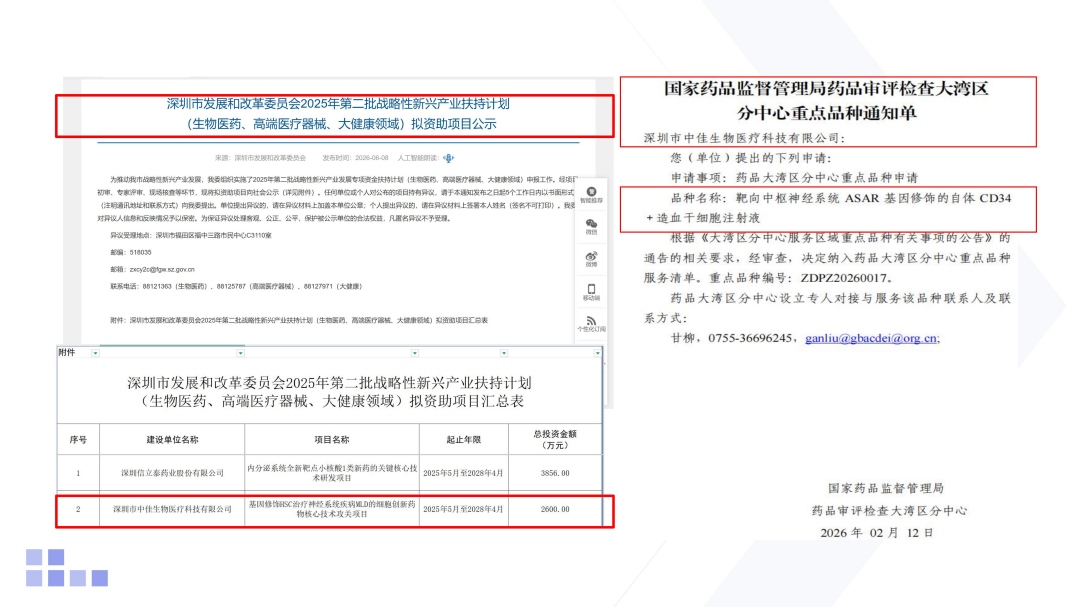
The MLD program has completed its long clinical trial phase and is now in full commercialization across core global markets, with long-term real-world data follow-up ongoing. As early as 2014, the project team pioneered the first hematopoietic stem cell gene therapy (HSC-GT) for MLD patients in Asia and launched a multicenter, single-arm, open-label clinical trial conducted simultaneously at Shenzhen Second People's Hospital, Shenzhen Children's Hospital, Guangzhou Women and Children's Medical Center, and the Li Ka Shing Faculty of Medicine of the University of Hong Kong. The trial results confirmed safety and efficacy, and the findings were published in the top-tier journal Protein & Cell. Among the earliest patients treated, follow-up now exceeds 12 years; clinical data show that treated patients not only survive but retain cognitive and motor abilities comparable to healthy peers, achieving long-term "functional cure." The program has completed 12 years of clinical trials (IIT) and received a Strategic Emerging Industry Special Fund project (core technology breakthrough project) from the Shenzhen Municipal Development and Reform Commission for the core technology development of gene-modified HSC therapy for the neurological disease MLD, covering 2025-05-01 to 2028-04-30, with RMB 26 million. An IND application is currently in progress, with a pre-IND submission expected in October 2026.
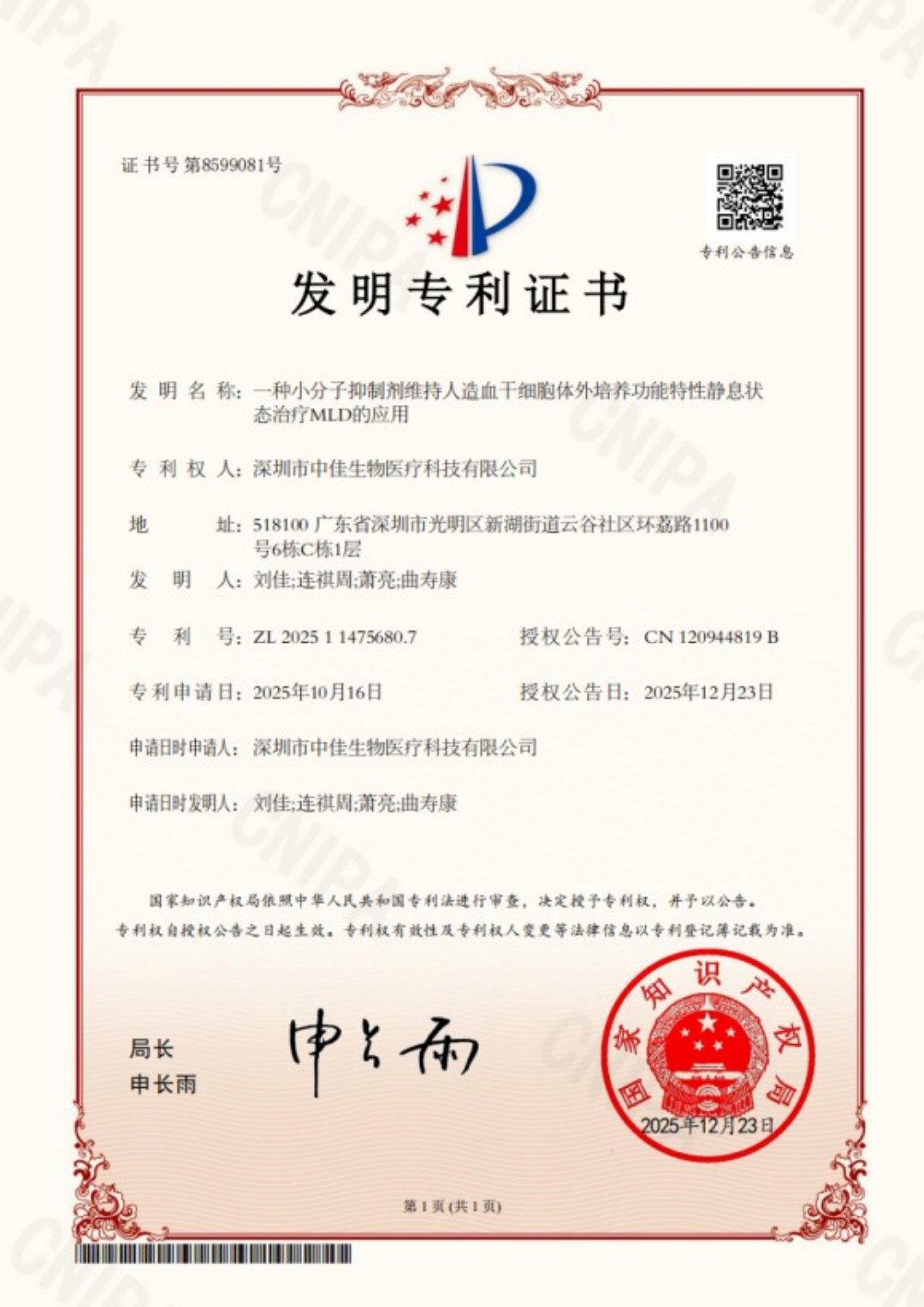
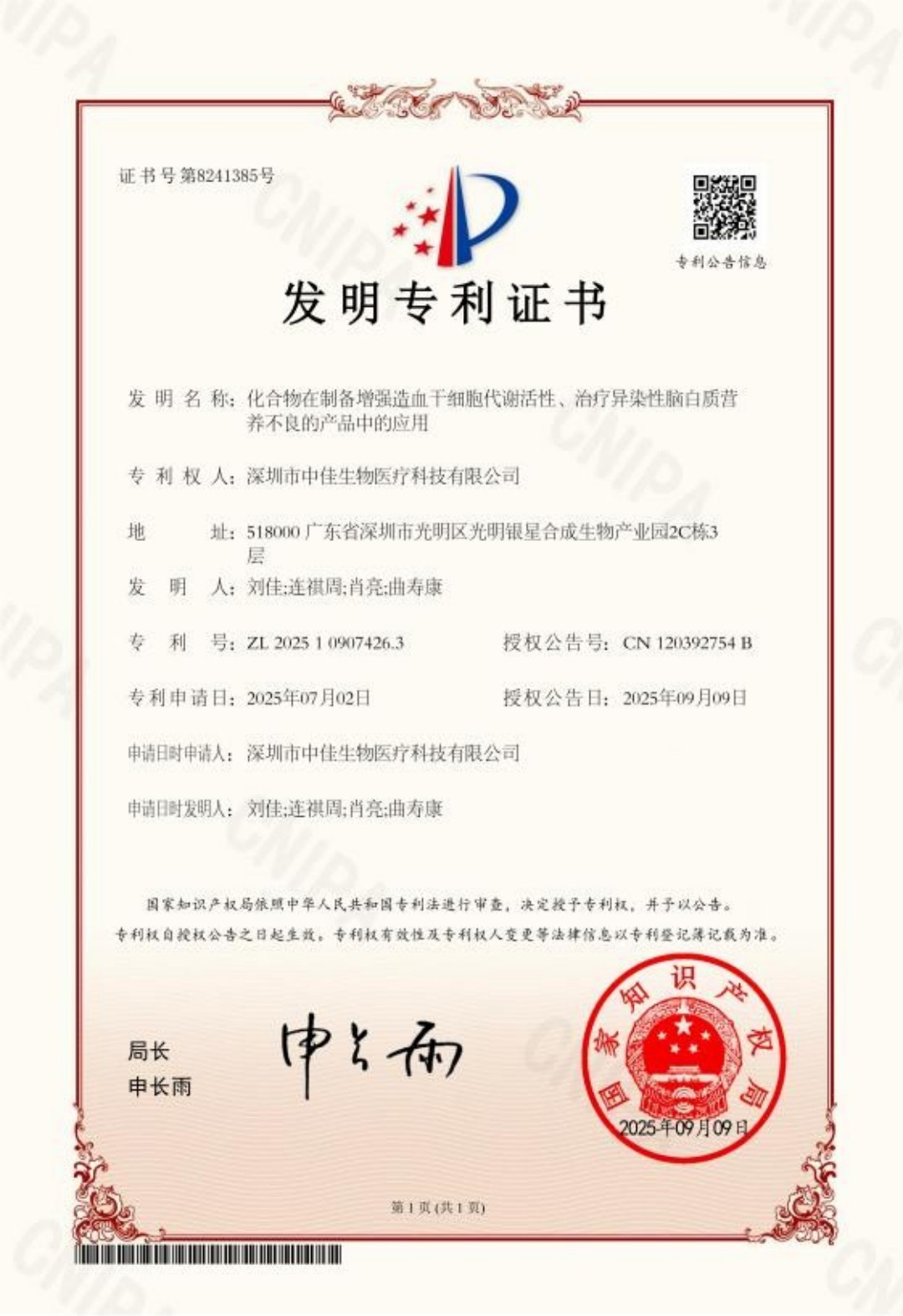
The MLD program has filed 6 invention patents and 1 international patent, of which 3 invention patents have been granted; 2 papers are under review awaiting publication. The intellectual property pool of the MLD program is exceptionally deep, and its development involves complex cross-disciplinary processes from vector construction to cell manufacturing.
Core viral vector and gene cassette patents: The program holds global core patents covering the structure of the self-inactivating lentiviral vector (SIN-LVV) used, specific promoter sequences, and the ARSA gene expression cassette. These patents ensure high efficiency of gene delivery and long-term stability of expression.
Cell processing and transduction processes: These cover the isolation and in vitro culture of autologous CD34⁺ hematopoietic stem cells, as well as high-efficiency transduction processes (for example, the specific transduction enhancers and hematopoietic stem cell culture processes developed by Zhongjia, which can substantially reduce the amount of viral vector used and improve cell transduction efficiency). A large part of the core barrier in cell and gene therapy lies in the principle that "the process is the product."
Media, cryopreservation, and formulation patents: These cover hematopoietic stem cell culture, cryopreservation of gene-modified hematopoietic stem cells, and stable formulations of the final injectable product, all of which are critical for a multi-center global commercial drug.
From both scientific and clinical perspectives, the MLD program is a breakthrough technology with very high maturity that has been validated for safety and efficacy.
Technical maturity: elegantly crossing the blood-brain barrier
The core problem in treating MLD is the lack of ARSA enzyme in the central nervous system, which causes demyelination; conventional enzyme replacement therapy (ERT) cannot cross the blood-brain barrier. The advanced technology of this MLD program highly maturely exploits the biological properties of hematopoietic stem cells: reinfused gene-modified CD34⁺ hematopoietic stem cells not only self-renew and engraft long-term in the bone marrow, but their progeny (the monocyte/macrophage system) can also cross the blood-brain barrier (BBB), differentiate into microglia in the central nervous system, and thereby continuously release ARSA enzyme locally in the brain, achieving "cross-correction" of surrounding neurons. This is a mature mechanism repeatedly validated by the scientific community over more than a decade.
Technical reliability and the "miracle" of efficacy: Compared with conventional bone marrow transplantation or enzyme replacement therapy (which cannot effectively cross the blood-brain barrier), this program uses autologous hematopoietic stem cells as a "Trojan horse" to deliver the gene into the brain. It is currently the only mechanism capable of halting the neurodegenerative progression of MLD, and follow-up data spanning more than 10 years demonstrate the long-term stability and durability of the gene recombination.
Very high reliability of long-term efficacy
Unlike other short-term gene therapies, this program exemplifies one-time treatment with lifelong benefit. Ultra-long follow-up data: 12 years of clinical trials; the earliest treated patients now have more than 12 years of follow-up (median follow-up nearly 7 years). Survival and motor function: Data show that treated late-infantile patients have a long-term survival rate of 100% (in the natural history group, untreated patients have a survival rate of only about 36.8%). The gross motor function (GMFM) and cognitive ability of the vast majority of patients have been effectively preserved; ARSA enzyme levels in peripheral blood return to normal or even supra-physiological levels within 3-6 months after treatment and remain stable for many years.
Safety and risk assessment
Safety of the viral vector: Early gene therapy using retroviral vectors carried a risk of insertional oncogenesis (leukemia). This program uses a third-generation self-inactivating (SIN) lentiviral vector, which greatly reduces the risk of activating adjacent proto-oncogenes. In long-term follow-up to date, no insertional tumor cases attributable to this program have been reported, demonstrating favorable long-term safety data.
Limitations and clinical challenges of Lenmeldy, the only international competitor
Lenmeldy is extremely dependent on the "time window": This is the therapy's greatest limitation. Lenmeldy cannot reverse neurological damage that has already occurred, so it must be administered before the patient develops severe symptoms (even at birth). Once the disease progresses to the middle or late stage, efficacy is greatly reduced or even absent, which also highlights the importance of newborn screening for rare diseases.
High risk of myeloablative chemotherapy before Lenmeldy: Before treatment, patients must receive high-dose chemotherapy to clear existing bone marrow cells; this preconditioning process carries serious risks of infection and bleeding as well as long-term potential side effects.
Accessibility and commercialization difficulty of Lenmeldy: Its US$4.25 million price and extremely complex personalized manufacturing (requiring the patient's cells to be shipped to designated international GMP facilities for processing and then shipped back for infusion) mean that this technology can currently be delivered only at a very small number of top medical centers and depends heavily on reimbursement by national or commercial insurance.
Market demand: extremely high clinical value and an urgent "first-mover" need
MLD is an ultra-rare lysosomal storage disease caused by mutations in the ARSA (arylsulfatase A) gene, with an incidence of approximately 1 in 10,000. Although it is a rare disease, market demand is highly rigid and urgent.
An unmet clinical desert: Before the advent of cell and gene therapy, there was no disease-modifying treatment; clinicians could rely only on conventional bone marrow transplantation (which has a high rate of allogeneic rejection and limited neurological improvement) or symptomatic supportive care. Late-infantile patients typically face a vegetative state or death within a few years of onset.
Absolute, rigid demand within the "time window": Demyelinating lesions of the white matter are irreversible. This means that the period before clinical symptoms appear, or at the very earliest stage, is the golden window for cell and gene therapy. A next-generation drug that provides a curative effect of "one injection with long-term stable ARSA expression" represents an exclusive, absolute necessity for diagnosed families.
Competitive landscape: global monopoly and the opportunity for domestic substitution
At present, the global benchmark in the MLD cell and gene therapy field is Libmeldy (Lenmeldy), developed by Orchard Therapeutics (acquired by Kyowa Kirin).
Limitations of the international benchmark: Lenmeldy is priced at as much as US$4.25 million (approximately RMB 30 million+), making it the most expensive drug in the world. Although approved in the United States and Europe, its extremely high price, complex cross-border autologous cell transport, and manufacturing cycle make it difficult for many international patients (especially in the Asia-Pacific region) to access.
A strategic blue ocean for domestic innovative drugs: In China, no comparable product is on the market, and clinical trial pipelines are scarce. Developing a next-generation MLD cell innovative drug with independent intellectual property rights and more controllable costs would not only fill the gap in China and the Asia-Pacific region but also enable strong domestic substitution through "affordability."
Core commercialization pain points and breakthrough paths
To assess the future prospects of this product, one must confront the common pain points of cell and gene therapy for rare diseases and identify targeted breakthroughs:
Patient identification: extremely dependent on "newborn screening (NBS)." Pain point: MLD onset is insidious; once obvious motor impairment or cognitive regression appears, the efficacy of gene therapy is greatly reduced. Prospect breakthrough: Globally, efforts are underway to include MLD in routine newborn screening and high-risk infant genetic screening programs (for example, the United States has added it to the RUSP recommended screening list). As the cost of high-throughput sequencing (NGS) declines and early screening becomes widespread, detection rates for latent/pre-symptomatic patients will grow explosively, directly expanding the potential patient pool for the drug.
Manufacturing barriers: stability of viral vector titer and VCN. Pain point: Autologous HSC gene therapy processes are extremely complex. Lentiviral vector (LVV) production costs are high, and maintaining the average vector copy number (VCN) after reinfusion and the long-term stability of ARSA enzyme activity (from Day 3 to Day 16 and even longer) places extremely high demands on CMC (chemistry, manufacturing, and controls). Prospect breakthrough: If a next-generation product can achieve technical breakthroughs in transduction efficiency and post-transduction cell proliferation viability (for example, by using better enhancers or optimizing purification processes) and substantially reduce the manufacturing cost per batch, it will gain substantial gross margin and pricing power.
Payment mechanisms: from "sky-high-priced drugs" to "value-based care." Pain point: Rare disease drugs can easily fall into the payment dilemma of "a drug with no market." Prospect breakthrough: The core of future commercialization lies in introducing outcomes-based installment payment mechanisms. By tracking ARSA enzyme activity and long-term neuro-motor development indicators after reinfusion, obtaining installment premiums or medical insurance fund support can greatly ease the pressure on a single payer.
Summary of future market prospects
Overall, the development prospects of the next-generation curative MLD cell innovative drug show a pattern of "small barriers, large barriers, but once overcome, the barriers endure":
Dimension | Prospect assessment | Key driving factors |
Market size | Continues to expand | The global CGT (cell and gene therapy) market is growing at a CAGR of more than 20%. As MLD screening rates rise, the penetration rate of "diagnose and treat immediately" will approach over 90%. |
Competitive moat | Extremely high | Lentiviral transduction of HSC technology has extremely high entry barriers. The pipeline that first completes clinical validation and achieves definitive viability will establish a multi-year industry monopoly in regional markets. |
Social and economic benefits | Enormous | One-time cure can free patients' families from a lifetime burden of medical care. Against the policy backdrop of national encouragement for upstream intervention in genetic diseases, it enjoys a strong policy tailwind. |
Strategic recommendations:
The core competitiveness of the next-generation product should focus on "higher safety (lower risk of insertional mutation)," "more efficient and stable in vivo ARSA expression (optimized VCN)," and "more competitive localized CMC costs." Once clinical data demonstrate efficacy comparable to the international benchmark, the product will not only have broad prospects in the domestic market but also possess enormous potential for cross-border expansion into underserved markets such as Southeast Asia.